A Multisensory VR Study
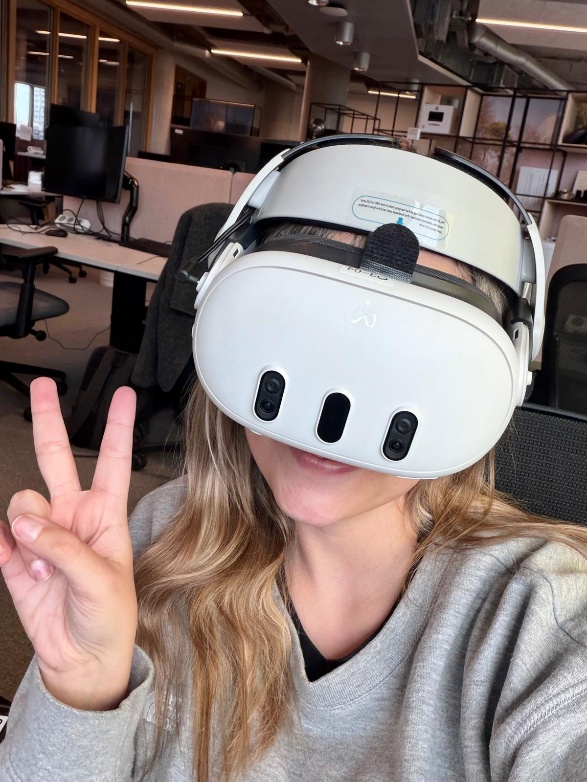
From March to May 2026, I joined the Connected Environments Lab at UCL’s CASA as a visiting PhD student. My doctoral research, conducted at the University of Trento and Eurac Research (Italy), investigates how people perceive smells in indoor environments and how olfactory experience interacts with the other sensory dimensions of buildings. During my time at CASA, I had the opportunity to translate one of the central questions of my PhD into an immersive experiment:
Can what we smell change the way we experience what we see?
More specifically, the study investigated whether different smells and window views could influence people’s perceptions, physiological responses and cognitive performance in offices.
Buildings are multisensory environments
Research on indoor environmental quality often separates buildings into individual domains: thermal conditions, lighting, acoustics and air quality. Occupants, however, do not experience these dimensions independently. When we enter a room, we simultaneously perceive its temperature, brightness, sounds, smells, materials and spatial configuration. Our brain integrates these signals into an overall impression of the environment. One sensory stimulus can also influence a response that appears to belong to another sensory domain. A sound might affect how warm a room feels, for example, while lighting conditions may influence perceived air quality. These are known as cross-modal effects. My PhD focuses on one of the least explored components of this multisensory experience: smell.

Why investigate smells and window views?
Windows are among the most valued elements of an office. They provide daylight, visual connection with the outdoors and access to natural or urban scenes. However, not all workplaces offer high-quality views. Some occupants have a very small window, an obstructed view or no window at all. This led us to ask whether olfactory stimuli could alter the experience of these different visual environments. For example, would the smell of freshly cut grass reinforce the positive experience of a green outdoor view? Could the same smell affect the perception of a very limited window? What happens when a natural smell is combined with an artificial urban scene, or when an artificial smell accompanies a view of nature?
Why use virtual reality?
Changing a window’s size, position or view content in a real office is difficult. Even when several rooms are available, they are rarely identical in terms of daylight, temperature, furnishings, orientation and outdoor conditions. Virtual reality offered a way to overcome these limitations. At CASA, we developed an immersive digital replica of a real office and created multiple versions of the same space. The room layout, furniture and participant position remained constant, while the characteristics of the window view could be systematically changed. This allowed us to control the experimental conditions while still giving participants the impression of being inside a three-dimensional office.
Fifteen versions of the same office
The 5 different visual scenarios were:
- Natural view with limited view access;
- Natural view with full view access;
- Artificial view with full view access;
- Artificial view with limited view access;
- No view.
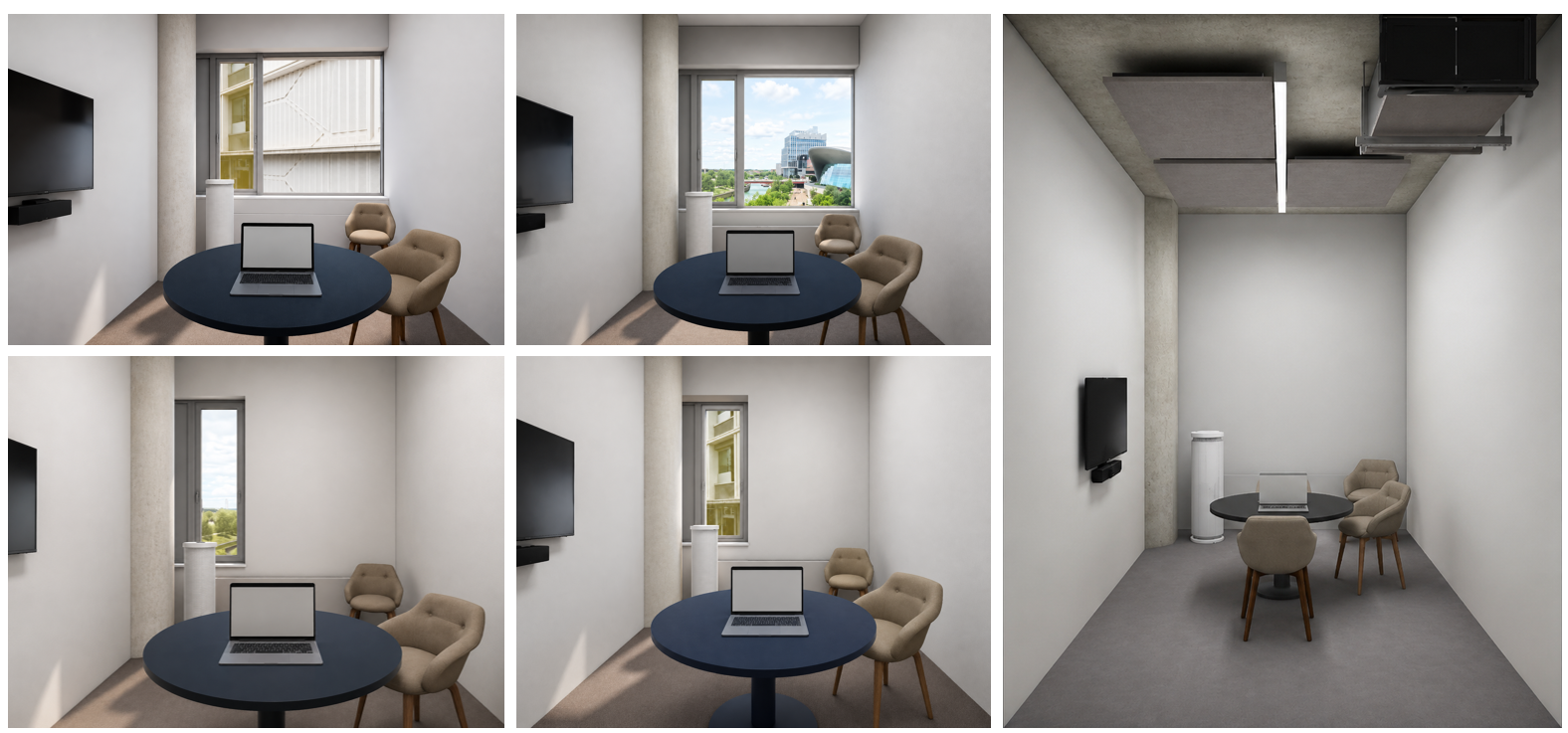
The five visual environments were combined with three olfactory conditions:
- A natural smell, associated with freshly cut grass;
- An artificial smell, associated with talcum powder;
- An odourless control condition.
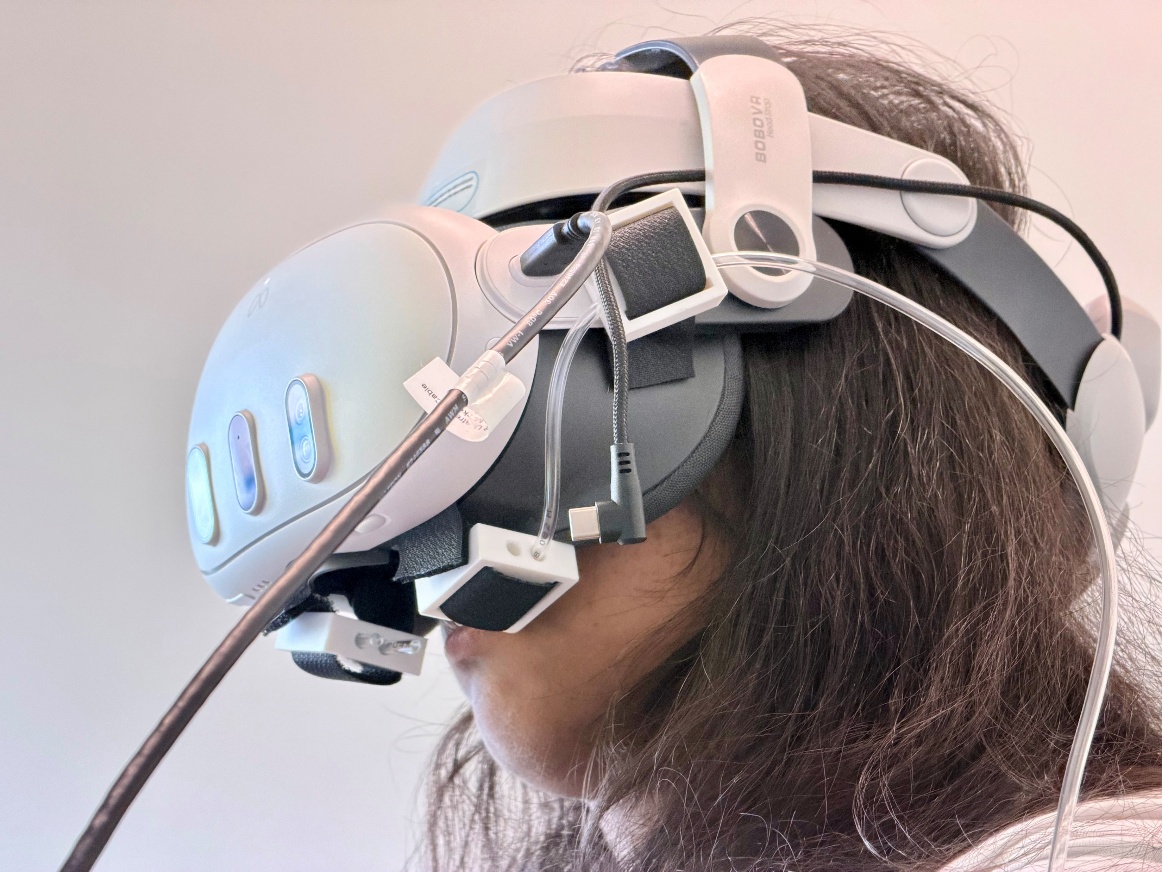
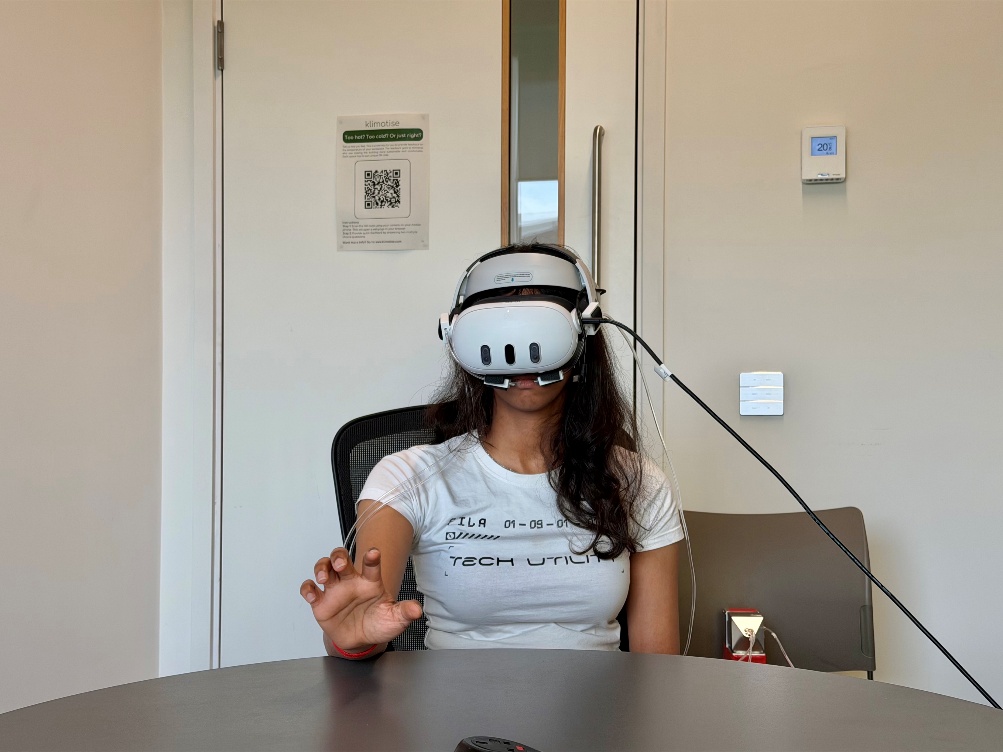
This produced a full factorial experiment comprising 15 visual–olfactory combinations. Twenty-three participants experienced all 15 conditions. Smells were delivered close to the participant through a computer-controlled scent-delivery device. A pulsed delivery method helped control the timing of the olfactory stimulus and reduce unnecessary dispersion of the scents within the physical room.
For every condition, we collected three complementary types of response.
First, participants completed questionnaires assessing their perceptions of the office, the window view, the smell and their emotional state.
Second, wearable devices recorded physiological signals related to arousal and autonomic activity.
Finally, participants completed cognitive tasks measuring processes such as working memory, sustained attention and reaction time.
Connecting software, hardware and human experience
Running the experiment required the integration of several components: the virtual office, questionnaires, cognitive tasks, wearable sensors and scent-delivery hardware.
The experiment therefore became as much a technical coordination challenge as a research study.
The visual conditions and experimental sequence had to be programmed within the virtual environment. The scent device had to communicate with the software so that the correct smell was delivered at the correct moment. Instructions, questionnaires and tasks had to be understandable and comfortable to complete while wearing a headset.
Addressing these challenges highlighted the benefit of working within the Connected Environments Lab, whose interdisciplinary expertise and collaborative support provided valuable guidance across spatial design, environmental sensing, programming, prototyping and human-centred research.
What I took away from CASA
My time at CASA gave me the opportunity to approach indoor environmental research from a new perspective.
As a building engineer, I am accustomed to thinking about environmental measurements, comfort models and building performance. Working within the Connected Environments Lab encouraged me to connect these areas with immersive technology, interaction design, sensing systems and real-time experimental control.
The experience also reinforced the importance of interdisciplinarity. Understanding how people experience buildings cannot be reduced to a single environmental parameter or academic discipline. It requires collaboration between building science, psychology, computer science, design and human–computer interaction.
What comes next?
Three months were enough to design and run the study, but certainly not enough to exhaust the questions it generated.
The immediate next step is to complete the analysis of the perceptual, physiological and cognitive data. Because data analysis is still ongoing, it is too early to draw conclusions about whether particular smells can improve the experience of limited or visually deprived offices.
In the longer term, this research may contribute to a better understanding of how multisensory design can support occupants in offices with limited access to high-quality views.
Acknowledgements
I would like to thank Dr Valerio Signorelli who worked with me and supervised me during this period and the entire CASA Connected Environments team for welcoming me and supporting the development of the study.
I am also grateful to Prof. Marianna Obrist and Christopher Dawnes (Hynt) for their support with the scent-delivery system, and to all the participants who volunteered for the experiment.