A few weeks ago I had the opportunity to attend Google Cloud Next ‘26 in Las Vegas. This was my second time attending the event and I had the privilege to meet lots of cloud companies while out there (many of the services we use within the lab such as Grafana, GitHub and Anthropic) , attend many of the hands on session at the conference, see some fabulous demos of the new technology and meet many of my friends in the Cloud space!
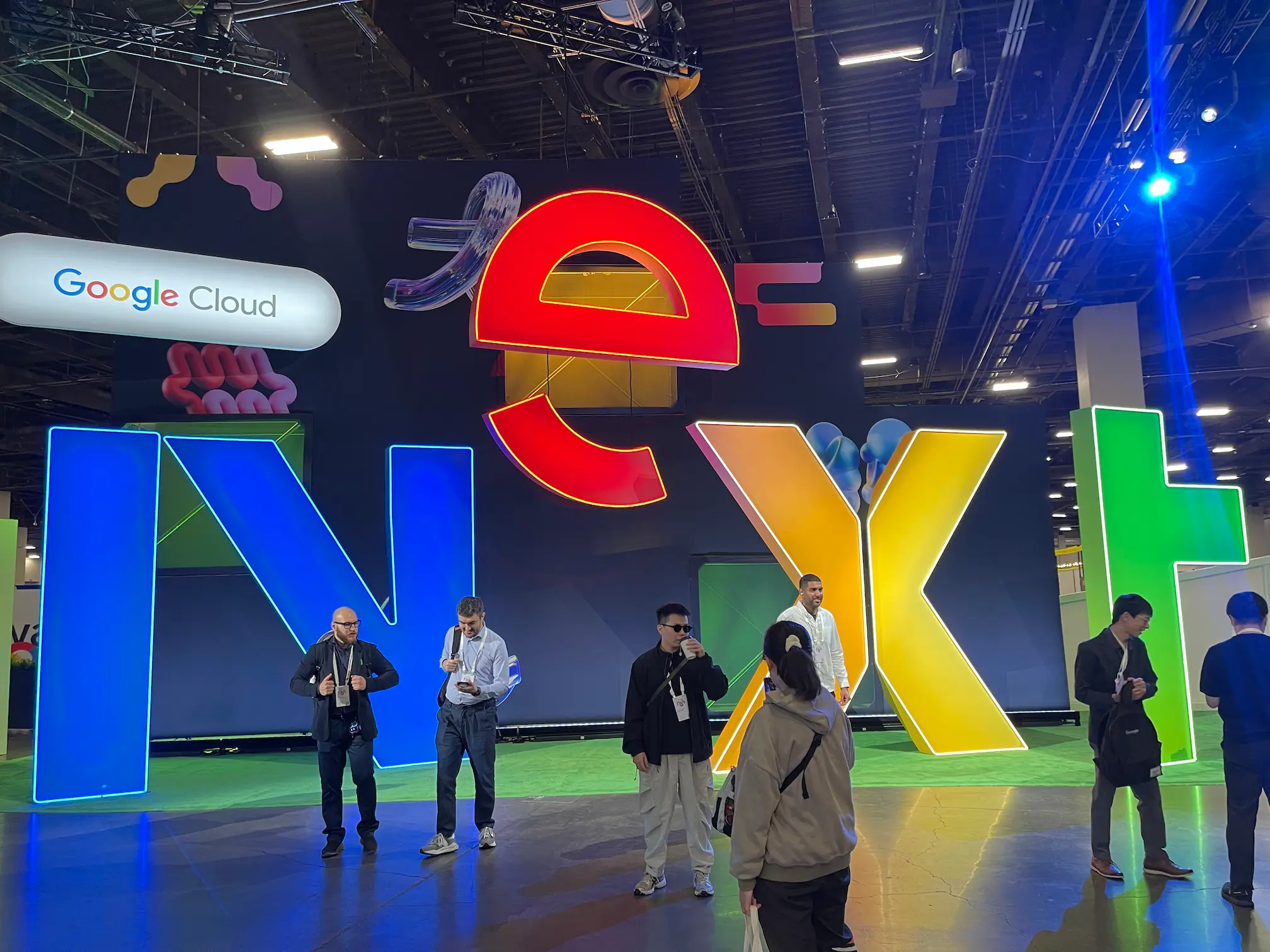 This year attending as a Google Developer Expert and a researcher bridging the gap between cloud architecture, advancements in AI and spatial computation at UCL CASA made this visit a unique one. It’s certain that yet again, “This is the year of Agentic AI” (isn’t every year?). Although this year, after talking with many of the attendees, there is a fundamental shift away from just chatting with LLMs but actually getting work done, and getting it done quicker! It was an amazing experience, and here are some of my highlights.
What is Google Cloud Next?
For those who haven’t experienced it, Google Cloud Next is the annual flagship event for all things Google Cloud and Google AI. The events team takes over one of the biggest hotels on the strip, the Mandalay Bay, bringing together over 30,000 developers, IT leaders, Enterprise and Cloud Practitioners. It’s where Google drops its biggest product announcements, deep-dives into new capabilities, and sets the pace for the cloud industry for the coming year. The Las Vegas Strip is full of white badges, Google Next Branding and lots of people carrying backpacks! Last year, they even took over some branding graphics on the Sphere!
 The great thing is that the Keynote, Developer Keynote and many of the sessions can all be watched virtually. Some of the deeper dive sessions are only for the attendees so I’ve tried to focus on some of the information of this post to these sessions so you can get a glimpse into some of the technology under the hood.
Being a Google Developer Expert, however, gives me some extra perks. We had some exclusive demos of the Android XR headset from Samsung, some deeper dives with DeepMind and the AI Agent team within Google who gave us a behind the scenes information about the latest models and how they interact with the various agent harnesses available today.
The Opening Keynote
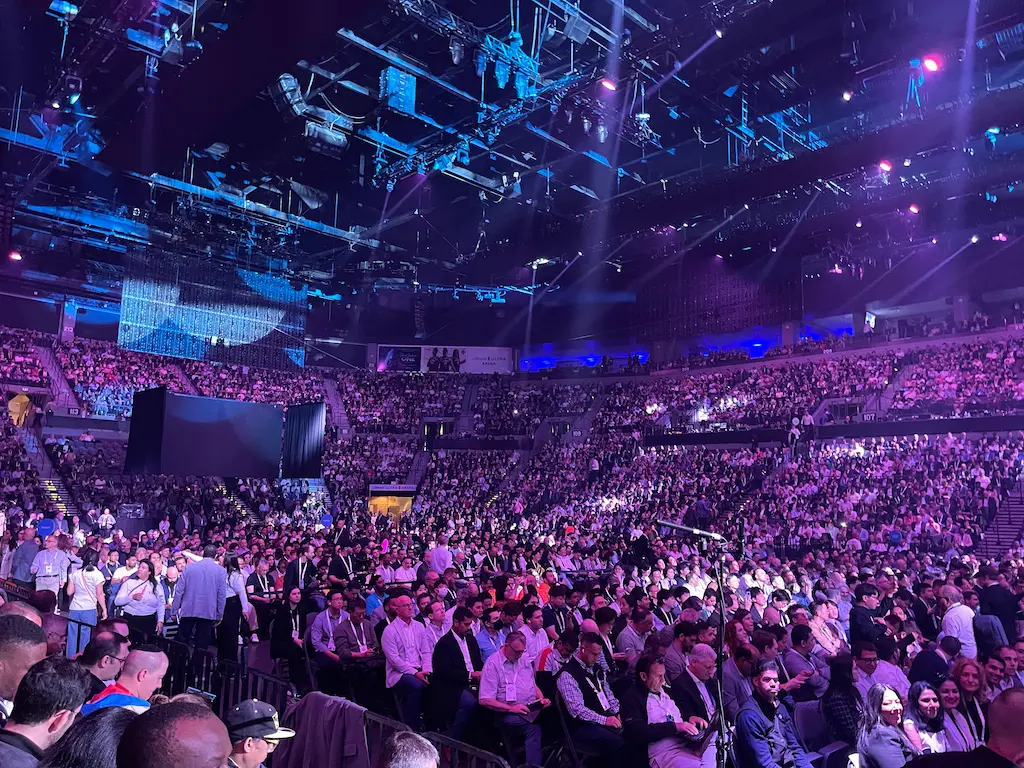
The keynotes were held in the Mandalay Bay’s Arena, which seats 10,000 people. It sounds like a lot, but it’s not enough! Only about a third of attendees manage to get seated in the arena, and you have to queue early. Lucky for me we had some allocated seating right next to the stage to watch the proceedings.
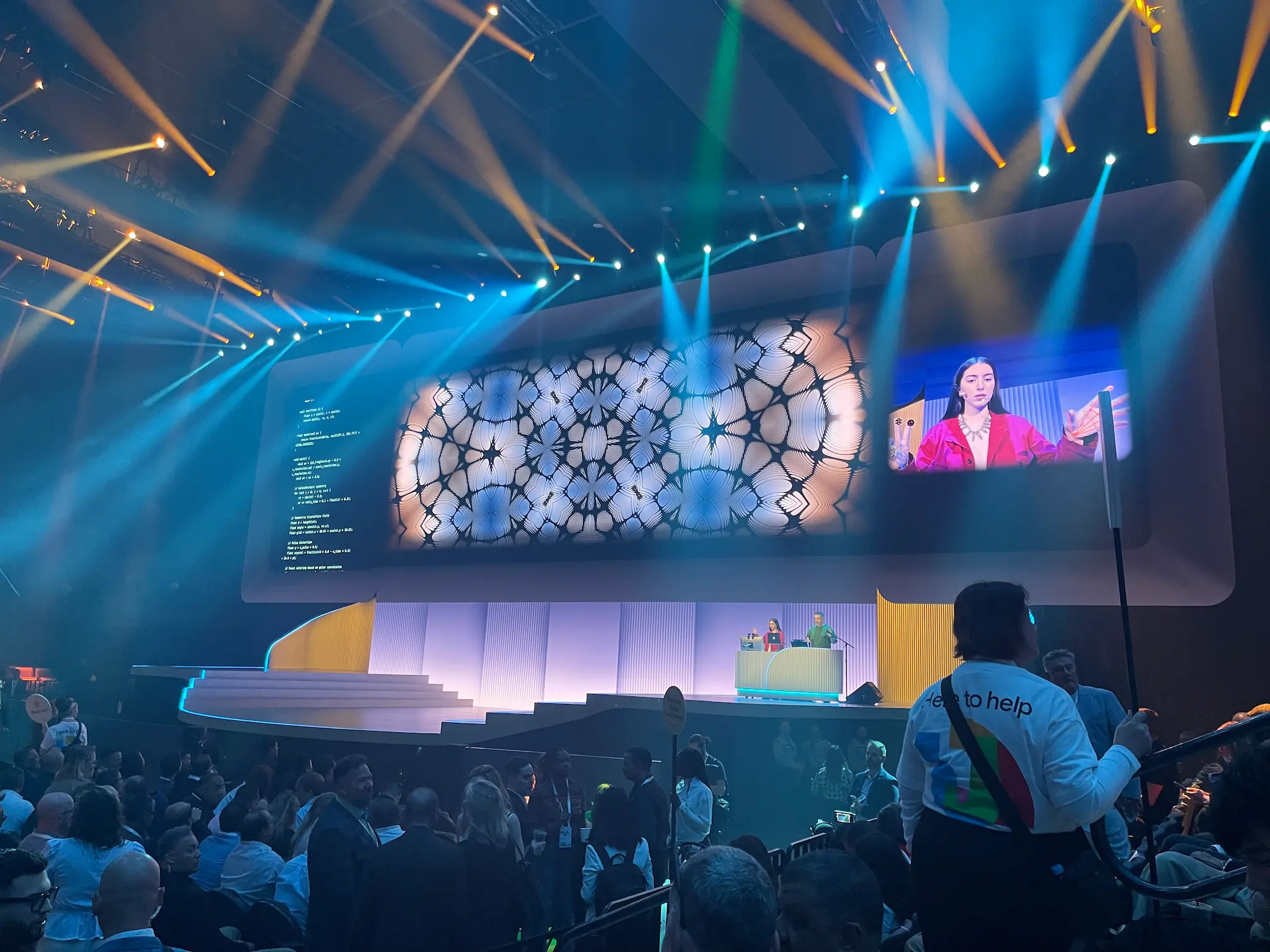
Pre-Entertainment came from a Google Engineer who was controlling live visuals with graphic shaders created by Gemini using hand gestures. Each finger was a real-time shader that had been generated using the audio being played by the on-stage DJ. Pretty cool! The intro to the event was created by Nano Banana 2, Veo 3.1, and Genie 3. It shows just how far in one year we’ve come in the world of Generative AI content.
The Era of the Agent is Here.
I promised I wouldn’t do a rigid keynote recap, but the central theme is too important to ignore, especially for the research we are doing. We are officially out of the agentic “proof-of-concept” era. We are in a world where everyone works with agents, and we now need to ensure these agents are production-ready, scalable, and can be fully observed and auditable.
Here are a few of the standout technical announcements that caught my eye:
-
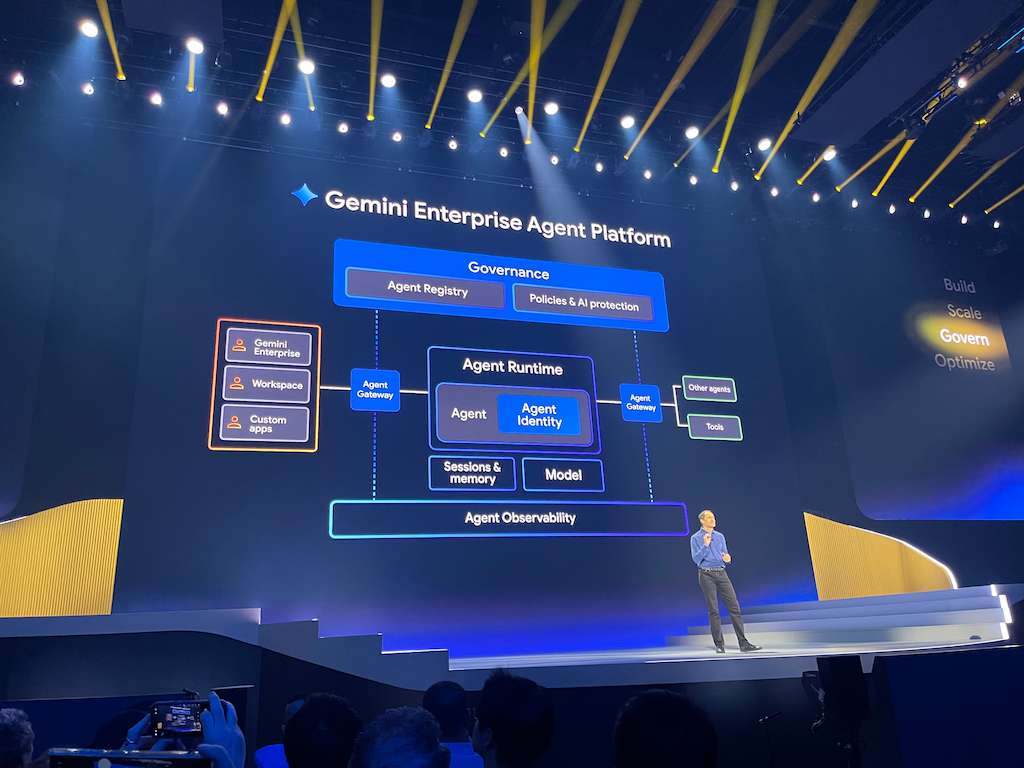
Gemini Enterprise Agent Platform: Vertex AI has evolved into this new four-pillar platform: Build, Scale, Govern, and Optimize.
-
Advanced RAG & Grounding Integrations: This one was big. They announced natively integrated, high-fidelity vector search and cross-database grounding within the Agent Registry. For those of us currently upgrading local RAG pipelines for publication and blog generation, the hybrid local/cloud architectural possibilities here are brilliant.
-
Spatial & Multi-Modal Agents: We’re seeing dedicated off-the-shelf skills for agents to natively interpret complex, multi-modal geospatial datasets, which is going to be incredibly disruptive for geocomputation.
-
Automated Agent Evaluation: A new governance framework designed to benchmark hallucination rates and enforce deterministic boundaries across multi-agent systems—an absolute necessity for deploying LLMs in rigorous academic and enterprise environments.
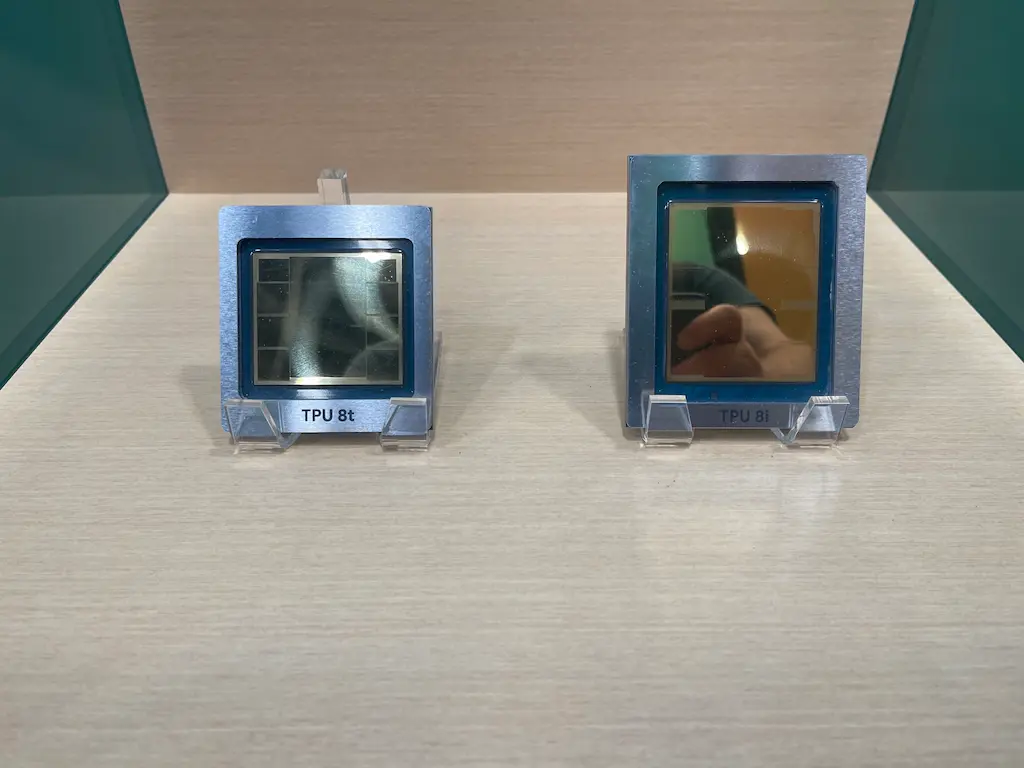
- Infrastructure & AI Hypercomputer: Advancements here included the 8th Gen TPUs (split into TPU 8t for training and TPU 8i for inference), the Google Cloud Axion N4A (offering 2x price-performance vs comparable x86 chips), and the new Virgo network doubling bandwidth between chip pods. Up to 1 million TPUs can now sit in a single training cluster, with up to 9,600 TPUs in a single Superpod!
-
Cross-Cloud Lakehouse: Standardised on Apache Iceberg, allowing agents to query data in AWS or Azure with zero-copy federation. Gone are the days of your data being locked to one cloud vendor, Google is making a play here for all your AI workloads being processed within GCloud and enterprises bringing their data from wherever it’s stored.
- Rapid Cache: A new storage family within Cloud Storage(replacing Anywhere Cache) that hits 2.5 TB/s throughput for bursty AI training workloads
The Expo Floor: Socks, Stickers, and Puppies
The expo floor is where everyone in the event hangs out. Here we eat lunch, talk to each other, play with some of the new tech and get to meet various companies who are adding value to Google Cloud through various integrations. The booth suppliers brought their A-game for swag this year. The undisputed champion of the 2026 conference floor? Socks. I am returning to London with no fewer than 8 pairs of vendor socks, alongside vast amounts of stickers to cover my server racks. At the end of the event I had a bed full of stickers, mugs, t-shirts, scarves, bags and even an Apple Airtag! I’m glad I had space in my suitcase to bring them all back to the lab.
Oh, and the puppies! Did i mention they had an area dedicated to puppies and allowing attendees to come make friends. Lots of hugs were given out during the 3 days!
The Developer Keynote
If you get a chance you should check out the developer keynote. The main demo this year was a marathon planner, simulator and organisation. The team broke down each part of the application (which is open-source and hosted on GitHub). The map simulating the 1000’s of runners (each an agent giving feedback on the route and a persona) was just stunning. Alongside this demo, all of the main demos throughout the event is published as a codelab and is runnable on Google Cloud (they also give you some credits per demo to try the tech). This is a first for a Google event and gives developers and students some hands-on experience playing with the APIs and the technology.
The Main Takeaway
The “Agentic Era” means moving away from single prompts. Google is betting that you won’t just “use AI,” but rather “manage a workforce of agents” that have their own identities, memories, and governed access to your data. Next ‘26 made one thing clear: the days of chatting to LLMs is old news, and the intelligent agent has arrived. The challenge for the next year won’t be ‘if’ you use AI, but how effectively one can harness a team of agents where your ideas, intuition and agentic autonomy work together. As we move toward these agentic workflows, the next frontier will be grounding these agents not just in text and code, but in the physical and spatial contexts where real-world decisions actually happen. The biggest question, however, stands, how much will this agentic future cost!